
How to Make Your Living Room Feel Warm and Inviting: A Thoughtful Guide to Creating a Home You'll Truly Love

Updated: Aug 21
Have you ever opened Instagram or Pinterest, looked at someone's beautiful living room, and suddenly felt like your own home wasn't good enough?
Within minutes, you're browsing rugs, lamps, artwork, cushions, and furniture and convinced that a complete makeover is the answer.
But is it?
Or are you simply seeing your home through someone else's expectations?
A warm and inviting living room isn't created by buying everything that's trending. It's created by understanding what makes you feel comfortable, peaceful and at home.
This guide isn't here to convince you to spend money. It's here to help you make decorating decisions you'll still love years from now.
NOTE:
This is one of the most detailed guides I've written, so it's longer than my usual blog posts. I've intentionally taken a slower, more thoughtful approach to help you make decorating decisions with confidence rather than regret.
To make it easier to read, I've divided this guide into sections.
You're currently reading Section 1.
When you're ready to continue,
you can read Section 2: HERE (coming soon)
Part 1 – Before You Buy Anything, Pause
Why Are You Really Redecorating? (How to Make a Living Room Feel Warm and Inviting)
Before you add another cushion to your cart, save a dozen inspiration photos, or start planning a weekend makeover, take a moment to pause.
It might seem like an unusual place to begin a decorating guide, but this could be the most valuable step of all.

Today, we're surrounded by beautiful homes. Every time we open Instagram, Pinterest, or YouTube, we see perfectly styled living rooms with soft lighting, designer furniture, fresh flowers and carefully curated décor.
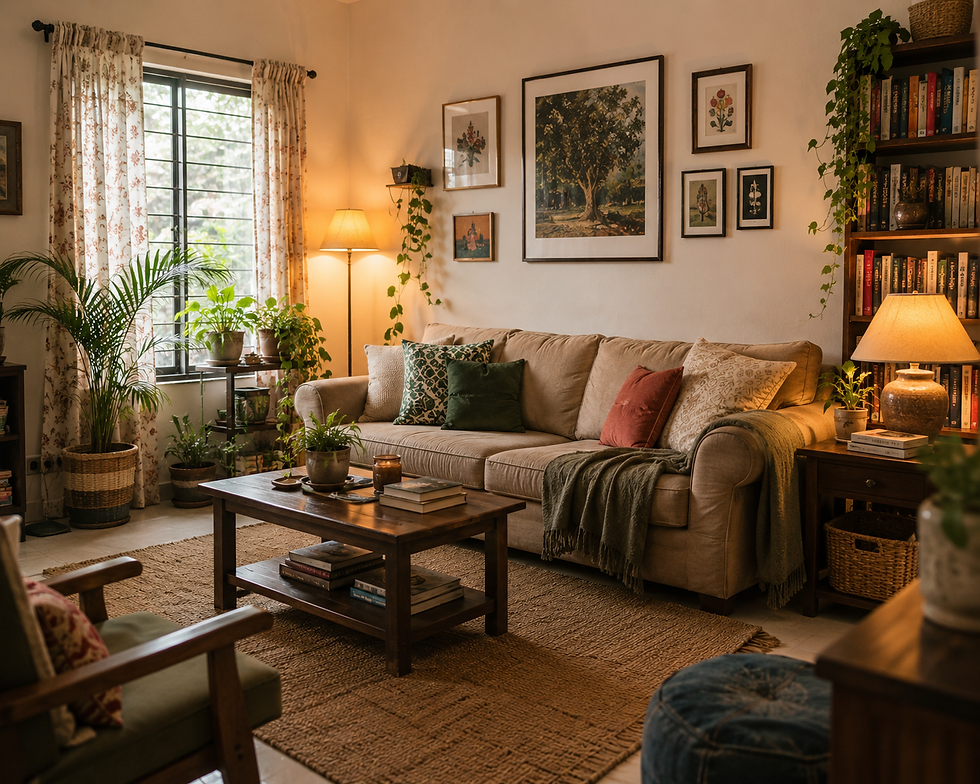

Do I Actually Dislike My Room—or Have I Started Comparing It?
After seeing enough of these images, it's easy to look around our own home and suddenly feel like something is missing.
But here's an important question:
Did your living room actually change, or did your perspective change?
A room you've happily lived in for years can suddenly feel outdated after watching a single home makeover video. That's not because your home became less beautiful overnight—it's because comparison has a quiet way of changing how we see what we already have.
Before spending money or making big changes, try to understand what's really motivating you. You might discover that your home doesn't need a complete makeover at all. Perhaps all it needs is better lighting, a little decluttering, a new furniture arrangement, or simply a fresh appreciation for the space you've already created.
Take a few minutes to honestly answer these questions.
Self-Reflection Questions
Why do I want to change my living room?
What happened that made me want to redecorate?
Is this something I've wanted for months, or is it a recent feeling?
Did one Instagram Reel, Pinterest photo, or YouTube video suddenly make my home feel "not good enough"?
Am I decorating because my current space no longer supports my lifestyle?
Or am I decorating because everyone online seems to have a perfectly styled home?
If I stopped looking at social media for a week, would I still want these same changes?
Am I trying to create a home that feels like me, or one that looks impressive to other people?
Will these changes make my everyday life more enjoyable, or will they simply make my living room look different?
There are no right or wrong answers. The purpose of these questions isn't to stop you from decorating—it's to help you decorate with intention instead of impulse.
When your decisions are guided by your own needs, lifestyle and personality, you're far more likely to create a space you'll continue to love long after today's trends have disappeared.
Comparison often creates dissatisfaction where none existed before.
A room doesn't become less beautiful because someone else's home looks different. Social media is designed to show carefully selected moments, often styled, edited, and photographed under perfect conditions. Your home doesn't need to compete with those images. It only needs to support the life you live within it. The goal isn't to own the trendiest living room. It's to create a space where you feel comfortable, peaceful and genuinely happy to come home every day.
Part 2 – Understand What Isn't Working
If the questions in the previous section helped you realize that your desire to redecorate comes from your own needs rather than comparison, that's a great place to start.
Now let's take it one step further.
Many of us say things like, "I don't like my living room anymore," but that's often too broad to be useful. If you don't know exactly what's bothering you, it's easy to spend money fixing the wrong problem.
Imagine going to a doctor and simply saying, "I don't feel well." The first thing they'll do is ask questions to understand the symptoms before suggesting a treatment.
Your living room deserves the same approach.
Instead of trying to solve everything at once, become curious about your space. Walk into your living room as if you're seeing it for the first time. Sit in your favourite chair. Stand in the doorway. Notice how the room makes you feel and what catches your attention first.
Then ask yourself:
What Exactly Don't I Like?
Try to be as specific as possible.

Instead of saying,
"I don't like my living room."
Ask yourself:
Is it too dark, even during the day?
Is it too bright or harsh because of the lighting?
Does it feel cold instead of warm and welcoming?
Does it feel empty, like something important is missing?
Does it feel cluttered and overwhelming?
Does it look outdated?
Is there too much furniture making it feel cramped?
Or is there too little furniture, making it feel unfinished?
Does the room feel uncomfortable to spend time in?
Does it lack personality or character?
Does it no longer reflect who I am or the life I live today?
The more clearly you can describe the problem, the easier it becomes to find the right solution.
For example, if your room feels dark, buying a new coffee table probably won't make much difference. But adding a floor lamp, choosing lighter curtains, or rearranging furniture to let in more natural light might completely transform how the room feels.
The goal isn't to decorate more—it's to decorate more intentionally.
Want to take these ideas into your own home? Download my free Thoughtful Living Room Planner.
Which Corner Bothers Me Most?
Sometimes the entire room doesn't need attention. It may only be one neglected corner that's affecting how you see the whole space.
Take a slow walk around your living room and notice where your eyes naturally go.
Ask yourself:
Is there one corner I always avoid?
Which area feels the most unfinished?
Is there a space that always looks messy, no matter how often I tidy it?
Is one wall completely empty while another feels overcrowded?
Is there a piece of furniture that never seems to fit?
Could improving just one corner make the whole room feel more balanced?

You might be surprised by how much difference one thoughtful change can make. A reading nook with a comfortable chair and lamp, a beautiful piece of artwork on an empty wall, or simply removing unnecessary furniture can completely change the atmosphere without requiring a full makeover.
Sometimes it's not the room that's bothering you—it's just one small part of it asking for attention.
What Emotion Does My Living Room Give Me? (How to Make a Living Room Feel Warm and Inviting)
A living room isn't just a collection of furniture and décor. It's a place where life happens.
It's where you unwind after a long day, spend time with family, welcome guests, celebrate milestones, read a book, watch a movie, or simply enjoy a quiet cup of tea.
That's why it's important to think beyond how the room looks and consider how it feels.
When you walk into your living room today, what emotion comes to mind first?

Does it feel...
Calm?
Peaceful?
Cozy?
Welcoming?
Bright and uplifting?
Busy?
Stressful?
Cold?
Empty?
Chaotic?
Now ask yourself one more question:
How do I want this room to make me feel instead?
Perhaps you want it to feel more relaxing after work. Maybe you want it to encourage family conversations, inspire creativity, or simply become a place where you genuinely enjoy spending time.
Your answer will influence every decorating decision that follows—from the colours you choose and the lighting you add to the furniture layout, textures, artwork, and accessories you bring into the space.
A warm and inviting living room isn't defined by expensive furniture or perfectly styled shelves. It's defined by the feeling it gives you every time you walk through the door.
Before changing your home, first understand the experience you want it to create. Once you're clear on that, every decorating choice becomes simpler, more meaningful, and far less likely to lead to regret.
Part 3 – Find the Real Problem
By now, you've taken the time to understand why you want to redecorate and what doesn't feel right about your living room.
Now comes the most important question of all:
"What problem am I actually trying to solve?"
It sounds simple, but this one question can save you from spending money on things that won't make your home feel any better.
When we're frustrated with a room, it's tempting to believe the answer is to buy something new. A new sofa. A new rug. A new coffee table. A fresh coat of paint. But sometimes, what feels like a furniture problem is really a lighting problem. What seems like a lack of décor might actually be too much clutter. And what appears to be an outdated room may simply need a different layout.
Instead of asking, "What should I buy?", try asking, "What is my home trying to tell me?"
Every room gives us clues. Our job is to notice them.
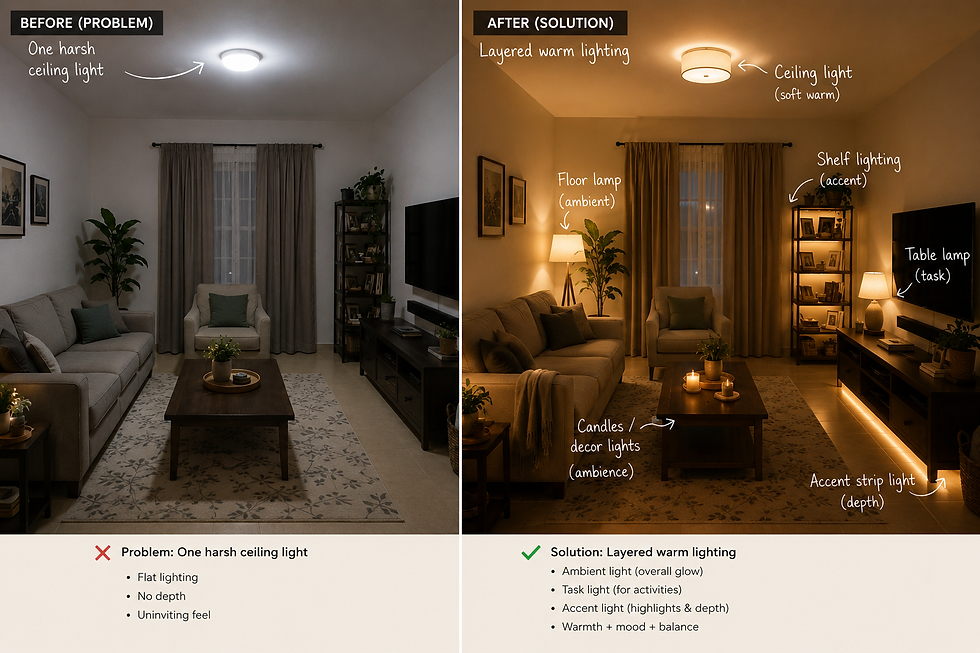
If Your Living Room Feels Dark...
The room may not need new furniture at all.
Instead, consider whether it needs:
Better lighting in the evenings
Warm-toned LED bulbs instead of cool white ones
A floor or table lamp to brighten darker corners
Lighter curtains that let in more natural daylight
Mirrors to reflect light around the room
If Your Living Room Feels Cluttered...
Before buying more storage baskets or cabinets, pause and ask:
Is the room truly lacking storage, or do I simply have more things than this space comfortably holds?
Decluttering, organizing, or finding a better place for everyday items may have a bigger impact than adding more furniture.
Often, removing a few unnecessary items makes a room feel larger, calmer, and more inviting than adding something new.
If the Room Feels Empty...
An empty room doesn't always need to be filled with more furniture.
Perhaps it needs:
Softer textures like cushions or throws
A rug to define the seating area
Curtains that add warmth
Indoor plants for a touch of life
Artwork that creates a focal point
Personal objects that tell your story

The right layout isn’t just about where furniture fits—it’s about how the space feels and functions.
The goal isn't to fill every empty space—it's to make the room feel lived in and welcoming.
If the Room Feels Cold...
A room can look beautiful but still feel uninviting.
Often, warmth comes from layering rather than replacing.
Ask yourself whether your room needs:
Warm lighting
Natural materials like wood, linen, cotton, or jute
Softer fabrics
Richer colours
Personal photographs or meaningful décor
Original artwork that reflects your personality
Warmth isn't something you buy all at once—it's something you build through thoughtful details.
If the Room Feels Outdated...
Resist the urge to replace everything immediately.
Instead, ask:
Which specific element feels dated?
Is it the wall colour?
The curtains?
The furniture layout?
The accessories?
The lighting?
Updating one or two key elements often has a much greater impact than replacing an entire room.
If the Room Doesn't Feel Like You...
Sometimes the biggest problem isn't style—it's connection.
Perhaps you've collected pieces over the years that don't reflect who you are today. Maybe you've decorated according to trends, gifts from others, or what was practical at the time, rather than what genuinely makes you happy.

Ask yourself:
Does this room tell my story?
If someone walked in, would they learn something about me?
What would I keep if I were decorating from scratch today?
A home becomes more meaningful when it reflects the people who live in it, not just the latest decorating trends.
Think Like a Problem Solver, Not Just a Shopper
The best decorating decisions come from solving problems rather than collecting products.
Before making any purchase, pause and complete this sentence:
"I want to buy this because..."
Then ask yourself:
What problem will this solve?
Is this the simplest solution?
Is there something I can try before spending money?
Will this improve how the room functions, or only how it looks?
Am I solving the real problem, or just treating the symptom?
You may discover that the answer isn't a new sofa at all. It might be moving the one you already own closer to the window. It might be replacing a cool white light bulb with a warm one. It might be removing a piece of furniture that's making the room feel cramped. Or it might simply be adding one meaningful piece of artwork that finally makes the space feel personal.
The most beautiful living rooms aren't always the ones with the most expensive furniture. They're the ones where every choice has a purpose.
Once you understand the problem you're trying to solve, decorating becomes less about buying more—and more about creating a home that truly works for you.
Want to take these ideas into your own home? Download my free Thoughtful Living Room Planner.
Part 4 – Discover Your Personal Style
By this point, you've already done something many people skip.
You've asked yourself why you want to redecorate, identified what isn't working, and started thinking about the actual problems you're trying to solve instead of immediately buying new things.
Now it's time to answer another important question:
"What kind of home actually feels like me?"
This might seem obvious, but it's surprisingly difficult to answer.
We spend so much time looking at beautifully styled homes online that our own preferences can become blurred. One day we love minimalist interiors, the next we're saving colourful bohemian living rooms, and by the weekend we're convinced we need a Japandi-inspired home because it's everywhere on Pinterest.
There's nothing wrong with taking inspiration from others. Inspiration can spark creativity and introduce us to ideas we might never have considered. The problem begins when inspiration quietly turns into imitation.
A home that looks beautiful in someone else's life may not feel right in yours.
That's why, before choosing paint colours, furniture, or décor, it's worth spending some time discovering what you genuinely enjoy—not what an algorithm thinks you should like.
"If you've decided that artwork is actually what your room needs, here's where you can explore..."
Start With Your Own Memories
Sometimes the easiest way to discover your style isn't by looking at magazines or scrolling through social media.
It's by looking inward.
Think about the places where you've felt most comfortable.
Ask yourself:
What type of home have I always imagined living in?
Have I ever visited a house, café, hotel, or holiday home that instantly made me feel relaxed? What did I love about it?
Which rooms make me want to stay a little longer?
What colours naturally catch my attention, even outside of home décor?
If trends disappeared tomorrow, what would I still choose?
You don't have to answer these questions perfectly.
Even noticing small patterns—like always being drawn to warm wood furniture or soft neutral colours—can tell you a lot about your personal style.
Don't Choose a Style Because It's Popular
Interior design trends change constantly.
A few years ago, everything was grey. Then came all-white interiors. Then earthy tones. Then curved furniture. Then Japandi. Next year, something else will take their place.
If you redesign your home every time a new trend appears, you'll never feel finished.
Instead, ask yourself:
Would I still love this if I had never seen it on social media?
That's often the difference between a trend you admire and a style that genuinely feels like home.
Which Style Feels Like Me?
You may already know the answer.
Or perhaps you've never thought about it before.

Explore the possibilities and discover the style that feels most like you.
As you explore different homes and interiors, notice which styles you naturally return to.
Do you enjoy the calm simplicity of minimalist spaces, where every item has a purpose?
Or do you feel happier surrounded by books, plants, artwork, and collected treasures in a more maximalist home?

Because great interiors aren’t just designed to look beautiful—they’re designed to feel like home.
Maybe you're drawn to the warmth of rustic interiors with natural wood and handmade details.
Perhaps you love the clean lines of modern design, the cosy charm of cottage-inspired homes, the timeless elegance of traditional Indian décor, the layered personality of eclectic spaces, or the relaxed textures of bohemian interiors.
You might even find yourself somewhere between several styles—and that's completely normal.
Most real homes aren't created from one design rulebook.
They're built gradually, combining different influences, memories, and personal preferences over time.
Your home doesn't need a label to be beautiful.
It simply needs to feel authentic to the people who live there.
Pay Attention to the Materials You're Drawn To (How to Make a Living Room Feel Warm and Inviting)
Style isn't only about furniture or colour palettes.
Sometimes it's the textures and materials that make a room feel comforting.
Close your eyes and imagine your ideal living room.
What do you notice?
Perhaps it's the warmth of natural wood, the woven texture of cane, the softness of cotton and linen, the earthy feel of jute, or the richness of velvet.

Your home can be modern + traditional, minimal + colourful, vintage + contemporary, or anything else that feels like you.
Maybe you're drawn to elegant touches of marble, timeless stone, warm brass, or the lightness of glass.
These choices might seem small on their own, but together they create the atmosphere of a room.
As you look through inspiration photos, don't just ask, "Do I like this room?"
Ask yourself:
What materials make me feel comfortable?
Which textures make the space feel warm and inviting?
What would I enjoy touching and living with every day?
The answers will help you make decorating decisions that are based on comfort and personality, rather than what's currently fashionable.
Your Style Doesn't Have to Fit Into One Box
One of the biggest misconceptions about decorating is that you have to choose a single style and follow it perfectly.
You don't.
Your home can be modern with vintage accents.
Minimal with colourful artwork.
Traditional with contemporary lighting.
Scandinavian with handcrafted Indian textiles.
Rustic with sleek furniture.
In fact, the most interesting homes often blend different influences in a way that feels personal rather than predictable.

The goal isn't to create a room that fits neatly into a design category.
The goal is to create a room that feels unmistakably yours.
As you continue through this guide, remember this simple thought:
You are not decorating to impress strangers on the internet. You are creating a place where you will wake up, relax, celebrate, work, read, laugh, and make memories.
When your home reflects your personality instead of the latest trend, it becomes more than just a well-decorated room.
It becomes a place that truly feels like home.
Part 5 – Decorate for Your Lifestyle, Not Someone Else's
By now, you've spent time understanding why you want to redecorate, identifying what's not working, and discovering the style that feels most like you.
There's one final piece of the puzzle before we start talking about decorating ideas:
Your lifestyle.
A living room isn't just a space to look at—it's a space to live in.
One of the most common decorating mistakes is designing a room around a photograph instead of the people who actually use it.
A room might look stunning in a magazine, but if it doesn't support your daily life, it can quickly become frustrating. Beautiful furniture that isn't comfortable, delicate décor you're constantly worried about breaking, or a perfectly styled coffee table that has to be cleared every evening isn't always practical for real homes.
The best living rooms don't just look good.
They work well.
That's why it's worth asking yourself not just "What do I want my living room to look like?" but also "How do I actually live in this space?"
Think About How You Use Your Living Room (How to Make a Living Room Feel Warm and Inviting)
Try to picture a normal week rather than a special occasion.
What really happens in this room?

Be honest with yourself.
Ask:
Do I host guests often, or only occasionally?
Do I spend quiet evenings reading here?
Do I mostly watch television or movies in this room?
Do I enjoy conversations with family here?
Do I work from this space sometimes?
Do I use it for hobbies, painting, crafting, or studying?
Is this where I drink my morning tea or coffee?
Is it a room that's used every day, or only when visitors come over?
Your answers matter because they determine what your room actually needs.
Someone who loves reading may benefit more from a comfortable armchair and a good floor lamp than from an elaborate entertainment unit.
Someone who regularly hosts family gatherings may value flexible seating more than delicate decorative pieces.
There isn't a single "correct" living room layout—only the one that supports your way of living.
Who Shares This Space With You?
A living room rarely belongs to just one person.
Think about everyone who uses it.
Ask yourself:
Do children spend time here?
Do pets use this room?
Do elderly family members need comfortable, accessible seating?
Does everyone in the household use the room differently?
These questions aren't meant to limit your creativity—they're meant to help you make choices that are enjoyable for everyone.
For example, if you have young children, washable fabrics and rounded furniture edges may make more sense than delicate materials that constantly need protecting.

If you share your home with pets, you might choose durable upholstery and rugs that are easier to clean.
A beautiful room shouldn't require you to constantly worry about living in it.
Formal or Relaxed?
Some people dream of a beautifully styled formal living room that's always ready for guests.
Others want a space where they can curl up under a blanket, read a book, watch a film, or spend hours talking with family.
Neither approach is better than the other.
The important thing is knowing which one suits you.

Ask yourself:
Do I want my living room to feel elegant and formal?
Or do I want it to feel relaxed and lived in?
Will I feel comfortable using this room every day, or will I be afraid of making it look messy?
Your home should invite you to use it, not make you feel like you're constantly preserving it.
Beauty or Practicality?
This question often gets presented as if you have to choose one or the other.
But in reality, the best homes usually combine both.
Ask yourself:
Does this room need to be beautiful, practical, or both?
Can I choose furniture that's comfortable as well as attractive?
Can storage become part of the décor instead of something I hide?
Will this decorating choice make my daily routine easier or more complicated?
A well-designed room isn't one where every cushion stays perfectly in place.
It's one where beauty supports everyday life instead of getting in the way of it.
Want to take these ideas into your own home? Download my free Thoughtful Living Room Planner.
Design Around Your Real Life
As you continue planning your living room, remember this:
Your home isn't being designed for a photoshoot.
It's being designed for ordinary mornings, long conversations, unexpected guests, lazy weekends, celebrations, quiet evenings, and all the little moments in between.
Those everyday moments are what truly give a room its warmth.
So before you buy anything, ask yourself one final question:
Will this make my everyday life better, or will it simply make my living room look different?
Whenever possible, choose the option that improves the way you live—not just the way your home looks.
Because the most inviting living rooms aren't the ones that impress people for five minutes.
They're the ones that make the people who live there feel comfortable, welcomed, and happy every single day.
This section naturally leads into the next stage of your blog—"Think About Your Budget"—because once readers know how they want their living room to function, they can begin making thoughtful, realistic decisions about what changes are worth investing in.
"If you've decided that artwork is actually what your room needs, here's where you can explore..."
Before You Continue to Section 2
If you've made it this far, I hope you haven't added a single thing to your shopping cart yet.
That was never the purpose of this guide.
Before changing your living room, you've taken the time to understand why you want to redecorate, what isn't working, what your room actually needs, what your personal style looks like, how you use the space, and what you can realistically afford.
You've also asked yourself some questions that are easy to overlook:
Do I actually love my home, or have I started comparing it to someone else's?
Am I decorating for myself, or for the version of my home I keep seeing on social media?
What do I genuinely need to change?
What can I improve without buying anything?
And what is worth spending my money on?
These questions are just as important as choosing the right colour, rug, sofa, lighting, or décor.
Because creating a warm and inviting living room isn't about following a formula. It's about understanding your own home first.
And now that you've done that, we're ready to move from thinking about your living room to actually transforming it.
Ready to Start Decorating?
In Section 2, we'll get into the practical side of creating a cozy, comfortable, and personal living room.
We'll look at ways to use:
Warm and inviting colours
Different textures
Layered lighting
Indoor plants and natural materials
Meaningful artwork
Personal décor
Comfortable furniture
Smart storage
Pleasant scents
Empty space and visual balance
But we'll approach each idea with the same philosophy:
Don't decorate simply because you can. Decorate because it makes sense for you.
You don't need to copy someone else's living room.
You don't need to buy everything at once.
And you don't need to create a "perfect" home.
You simply need to create a space that feels good to come home to.
Continue Reading
Ready to turn everything you've discovered into a warm, cozy, and inviting living room?
👉 [Continue to Section 2: How to Make Your Living Room Feel Warm and Inviting → coming soon]
Section 2 is where we move from reflection and planning to practical living room decorating ideas you can actually use in your own home.
Table of Contents
Workbook: The Thoughtful Living Room Planner
₹0.00
Buy Now
🏡 The Thoughtful Living Room Planner
A free printable workbook designed to help you plan your living room thoughtfully—before you start spending money.
📅 Format: PDF | Instant Download
📥 Price: FREE
✨ Pages: 10+ practical planning sections
🏠 Identify what's actually not working in your living room
💭 Reflect on how you want your space to look and feel
🎨 Discover your personal interior style
📏 Record your room and furniture measurements
🛋️ Plan your furniture arrangement and layout
🎨 Create your own living room colour palette
🛍️ Build an intentional shopping list
💰 Set and track your decorating budget
✅ Use a Before You Buy checklist to avoid impulse purchases
❤️ Make decorating decisions based on your lifestyle, comfort, personality, and needs
🌿 Learn to create a home that feels personal instead of simply following décor trends
🖨️ Designed to be printed and filled in by hand—or used digitally
What you'll get
A practical workbook to help you move from:
“I don't like my living room.”
to:
“I know exactly what I want to change and why.”
This planner is especially useful if you're feeling overwhelmed by Pinterest and Instagram inspiration, unsure of your decorating style, or tempted to buy things without knowing whether they will actually improve your space.
You don't need a perfect home. You need a home that feels like yours.
Created by Pinki Meena, Founder & Artist of Bottle Brush Art.


Comments